Freya Hartmann · 21 October 2026
Inside Specialized Labs: How Precision Tools Are Refining Flux Data for Long-Term Environmental Forecasts
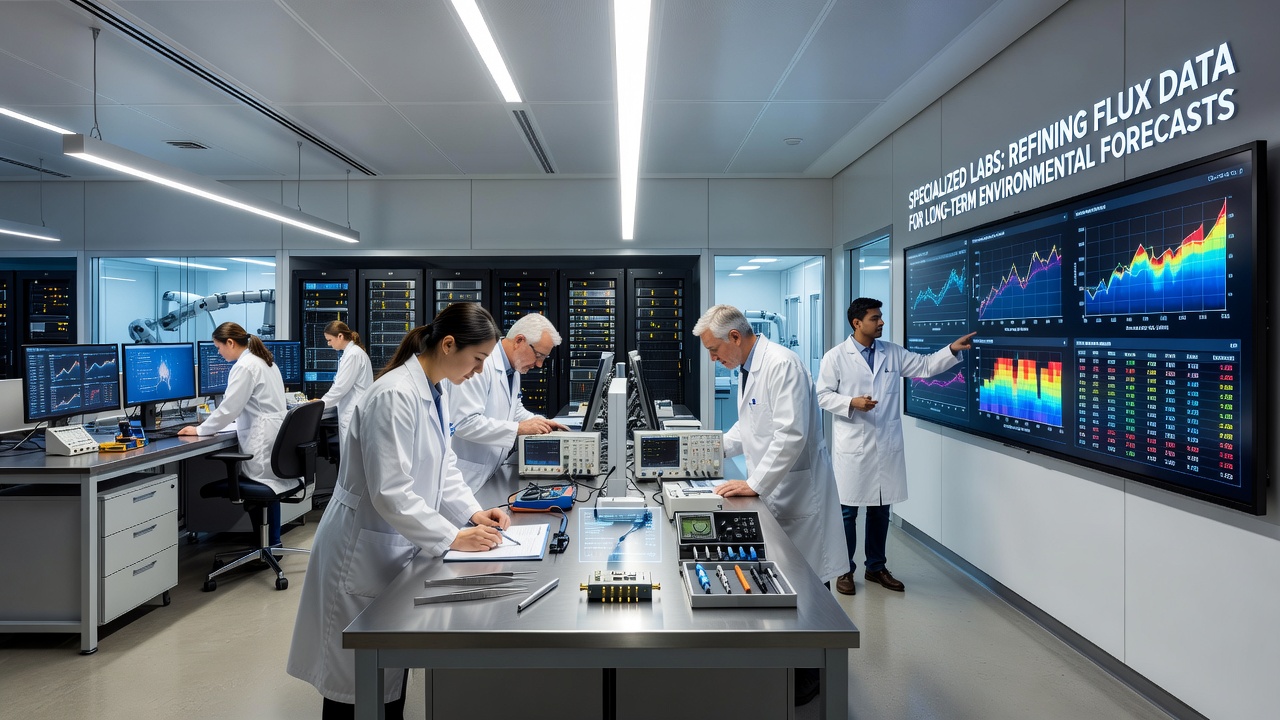
Specialized laboratories around the world now rely on advanced instrumentation to capture and refine flux measurements that feed directly into climate models and environmental prediction systems, and these facilities process data streams from towers, drones, and satellite sensors to produce more accurate representations of carbon, water, and energy exchanges across ecosystems.
Researchers have noted that eddy covariance systems combined with laser-based spectrometers allow continuous recording of trace gas concentrations at frequencies exceeding 20 hertz, while calibration routines performed in controlled chambers reduce systematic errors that previously accumulated over multi-year datasets.
Core Instrumentation and Calibration Protocols
Inside these labs technicians maintain arrays of open-path and closed-path gas analyzers that measure carbon dioxide, methane, and water vapor fluxes simultaneously, and regular zero-air and span-gas checks ensure drift remains below 0.1 parts per million for carbon dioxide throughout extended field deployments.
Automated alignment mechanisms adjust optical paths in real time when temperature gradients alter beam geometry, and software routines flag periods when turbulence statistics fall outside acceptable ranges before any data enter long-term archives.
Data Refinement Pipelines
Raw high-frequency time series undergo despiking, coordinate rotation, and frequency-response corrections within dedicated processing frameworks, and machine-learning filters trained on thousands of hours of labeled observations now identify periods of low turbulence or rain contamination more reliably than earlier threshold-based methods.
Quality-control teams cross-reference outputs against independent chamber measurements and aircraft profiles collected during intensive campaigns, and discrepancies trigger reprocessing of entire seasonal blocks to maintain consistency across global networks.
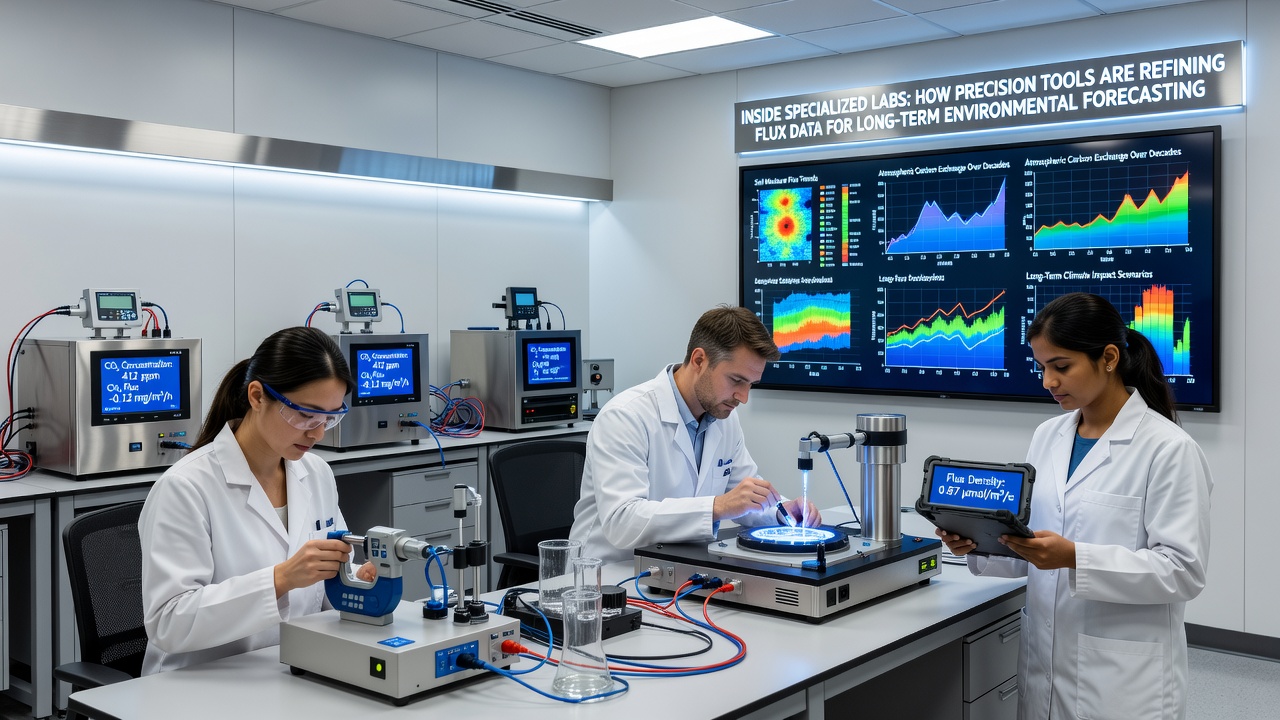
Integration with numerical weather prediction models occurs through data assimilation modules that ingest refined flux fields at hourly intervals, and centers such as those operated by the National Oceanic and Atmospheric Administration have reported improved skill scores for seasonal drought and carbon budget projections after incorporating these corrected observations.
Contributions to Extended Forecast Accuracy
Long-term environmental forecasts depend on accurate representation of surface-atmosphere exchanges, and refined flux datasets have enabled tighter constraints on parameters within Earth system models that simulate vegetation response to rising carbon dioxide levels and changing precipitation patterns.
Studies compiled by the European Environment Agency indicate that inclusion of post-processed flux measurements from multiple continents reduced uncertainty ranges in projected terrestrial carbon sinks by approximately 15 percent compared with earlier model versions.
Teams at the Commonwealth Scientific and Industrial Research Organisation in Australia have applied similar refinement techniques to savanna and woodland sites, and the resulting data products now support regional fire-risk and water-resource assessments issued each quarter.
Current Developments Through Late 2026
During October 2026 several networks plan synchronized calibration campaigns using portable reference standards traceable to World Meteorological Organization scales, and these efforts aim to harmonize measurements across more than 200 active flux sites before the next round of model intercomparison projects begins.
Advances in quantum cascade lasers and miniaturized Fourier-transform spectrometers continue to lower detection limits for nitrous oxide and isotopic species, while edge-computing units installed at remote towers perform preliminary corrections that reduce data transmission volumes by up to 60 percent without sacrificing scientific integrity.
Conclusion
Precision tools operating inside specialized laboratories have transformed the quality and usability of flux data that underpin long-term environmental forecasts, and ongoing standardization efforts across continents ensure these improvements propagate into operational modeling systems used by agencies worldwide.